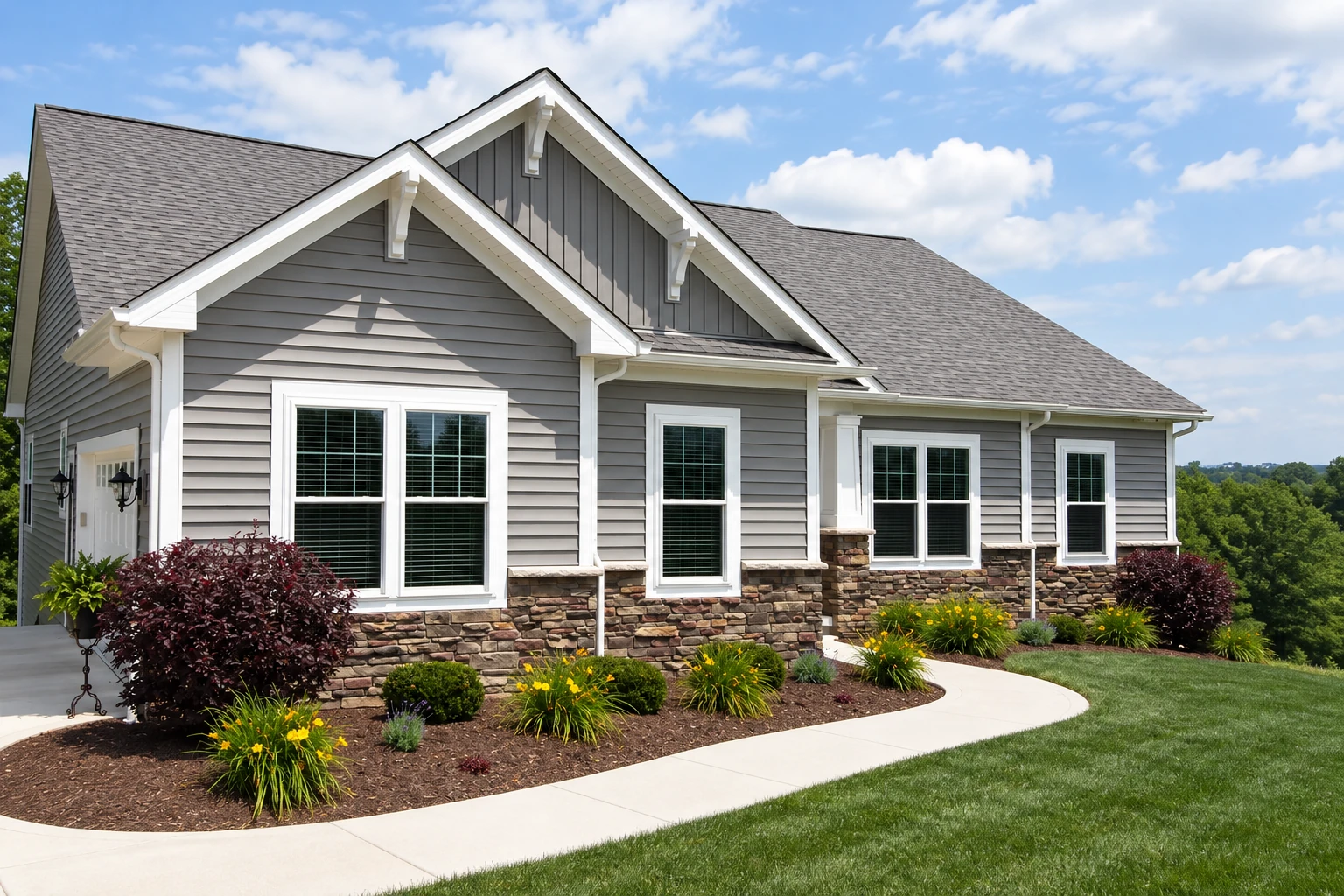
Stone veneer installation in Fayetteville NC - stone set right on a sound wall
Tired siding or a bare block foundation you'd like to cover? We check the wall behind it first, then set stone that's built to last.
What does stone veneer installation involve for a Fayetteville home?
Stone veneer installation puts a thin outer layer of manufactured or natural stone over your home's walls. At J&D Fayetteville Concrete and Masonry, we do it in Fayetteville by checking the wall behind it and fixing anything worn before any stone goes up, because veneer is only as good as that wall and the hands putting it on.
Most folks who call about veneer have a wall they're tired of looking at, often a plain concrete block wall out back or a foundation block wall showing along the front, and they'd like it to look like stone. The price moves with the stone you pick, how much wall there is, how many corners and windows it wraps around and whether the backing needs repair first, and the schedule mostly turns on that repair and the weather. I'll tell you which of those apply to your wall when I come out for the estimate.
How do you know your walls are ready for stone veneer?
Most veneer calls start with something a homeowner has been looking at for a while. These are the things that usually bring people to us, and what each one tends to mean for the job.
Bare gray block showing along the foundation usually means the house was built plain and could take a stone face.
Faded or dented siding along the lower front wall is a common place to add a band of stone.
Stones on existing veneer that sound hollow when tapped or have come loose usually mean the bond behind them failed.
Dark streaks or white powder below existing stone usually mean water is getting behind it and not draining out.
Cracks in a block or brick wall you want to cover usually mean it needs repair before it's faced.
A chimney, fireplace or column that doesn't match the rest of the house is often an easy place to start.
If stones are already loose or water is staining the wall, call us before you add or replace anything, because the wall behind them needs a look first.
What happens when you call us about stone veneer in Fayetteville?
Here's how a veneer job usually runs with us, from your first call to the last bucket hauled off. I come out for the visit myself and stay on the job with our crew.
Call or send us a message
Call (910) 302-3425 or send the form, and we'll get back to you to set a time to come look at the wall.
Walk the wall with you
I look over the backing wall, talk through manufactured and natural stone with you and answer whatever you ask. You get an estimate for your wall that takes in any repair the backing needs.
Fix the wall, then set stone
If the job needs a permit, we take care of it with the city or county office, and any worn spots in the backing get fixed before stone goes up. I'm on site with our crew the whole way, not just at the start.
Clean up and walk through
We clean up the site when the work is done. Then we walk the finished wall together so you can see it before we leave.
Get a free estimate for stone veneer on your wall
Send the form and we'll reply within one business day to set up a visit. I'll look at your wall with you and give you a free on-site estimate, with no pressure to book.
- Call
- (910) 302-3425
- Hours
- Mon–Fri: 8 AM–10 PM, Sat–Sun: 6 AM–9 PM
Manufactured or natural stone, and what goes behind it
Manufactured stone is cast to look like real stone, so it's lighter and comes in pieces that fit together without much cutting, which suits most siding and foundation jobs. Natural stone is real rock sliced thin, and every piece is a little different. If you lean toward natural, pick a stone with a track record of holding up outdoors in weather like ours, because stone industry guidance notes not every kind suits an outside wall.
What's behind the stone matters as much as the stone. On framed walls that call for a weather barrier, the sheet layer that keeps water off the framing, trade guidance calls for two separate layers lapped like shingles from the bottom of the wall up. A rainscreen, a thin drainage gap behind the stone, is an option that helps any water getting back there drain and dry faster, and I'll tell you whether I think your wall would benefit from one.
Stone veneer questions we hear in Fayetteville
Is manufactured stone veneer cheaper than natural stone?
Yes, manufactured and faux stone cost less than natural stone veneer, so the stone you pick has a big hand in your total. If you're weighing looks against budget, I can price both for your wall at the estimate so you see the difference before you decide.
Can stone veneer go over my existing wall?
Usually, if that wall is sound. National trade guidance for manufactured stone rules out walls that are breaking down or covered in EIFS, a foam board finish made to look like stucco. I check the backing at the estimate, and anything worn gets fixed first, which can change the plan and the size of the job.
Who signs the permit application for masonry work in Fayetteville?
Inside Fayetteville city limits, a licensed contractor or one of their own employees has to sign it, and the city voids applications signed by real estate agents, permit expeditors or anyone else, with legal action possible. If your job needs a permit, we take care of it and sign as your contractor, and if it's not clear whether one is needed, we check with the city's permitting office before we start, which is also where you can ask about your own project. The state licensing board's residential contractor classification is the one that covers masonry construction on homes.
Can stone veneer be installed in cold weather?
It can, as long as the wall is protected. One national trade specification calls for protecting the work before, during and for 48 hours after when it's 40°F or colder, and for shielding fresh work from fast drying for 72 hours when it's over 100°F, or over 90°F with wind above 8 mph. If you're planning a winter or midsummer start, ask any crew you're considering how they'll protect the wall, and I'll walk you through how we'd handle yours.
What causes stone veneer to fail?
Workmanship on the job is usually the main cause when stone veneer doesn't hold up, so the crew matters as much as the stone. When you compare bids, it's fair to ask whether the installer is a Certified MSV Installer, the trade group's credential for manufactured stone veneer, or can show work on jobs of similar size, since that's what the national specification looks for. We're fully licensed and insured, and it's satisfaction guaranteed on every job.
How long does stone veneer last?
When it's installed to recommended practice, stone veneer can do its job for decades. That's why I'd rather take the time to get the wall and the layers behind it right than rush the stone on.
Block work that pairs with stone veneer
Concrete block walls
If you need a new garden, privacy or yard wall, a block wall built square and solid gives stone veneer a sound face to bond to later.
Foundation block wall installation
If an addition still needs its foundation, block laid right from the start gives any stone you add later a sound wall to sit on.
Send us photos of your wall
Have a few photos of the wall and its current covering, plus a rough size, ready when you call (910) 302-3425 or send the form, so I can come out knowing what to look for.
Mon–Fri: 8 AM–10 PM, Sat–Sun: 6 AM–9 PM